
Start by observing your roof from the ground for any sagging or missing shingles. Use binoculars to spot cracked or curled shingles and inspect flashing around chimneys and vents. Check gutters and downspouts for debris and granule buildup. Look for water stains on walls indicating leaks. Document your observations with photos and notes for further evaluation. Consider hiring professionals for a thorough inspection to guarantee your roof’s condition is excellent and meets local regulations. Discover more expert insights.
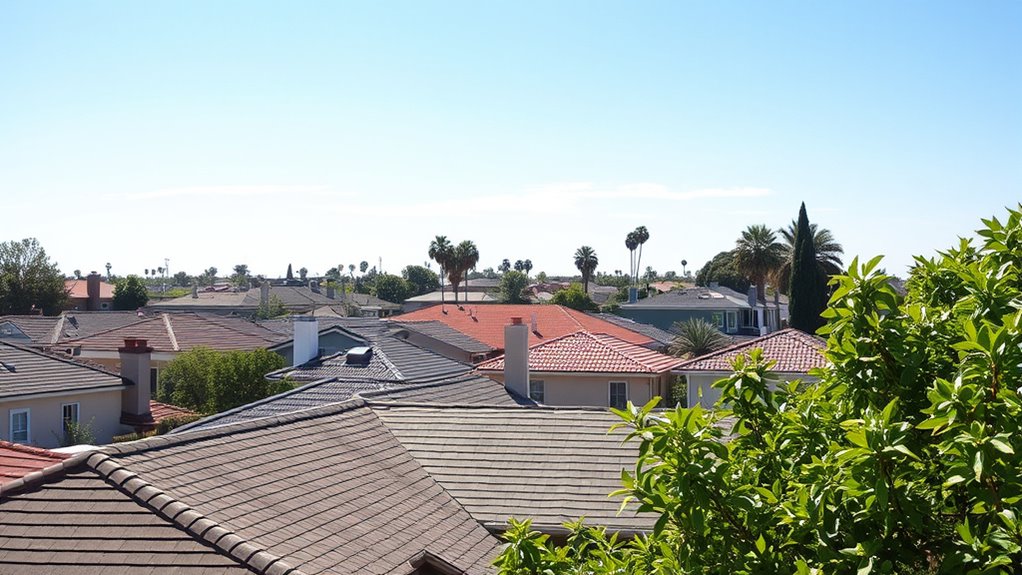
A good place to start when inspecting your roof is with a visual assessment from the ground. Stand at a safe distance to get a clear view of your roof, looking for sagging or unevenness, which might signal structural issues.
During your roof inspection, check for missing, cracked, or curled shingles; these signs of deterioration can lead to leaks if ignored. Pay special attention to the flashing around chimneys, vents, and skylights for rust or gaps, as these are common areas for water intrusion.
Also, examine the gutters and downspouts for blockages or granule buildup, indicating shingle wear. Finally, look for water stains or discoloration on exterior walls, which could suggest water damage needing professional attention. To ensure a thorough evaluation, consider hiring a licensed and certified inspector who can provide a comprehensive analysis of your roof’s condition.
When you’re inspecting your roof with binoculars, focus on spotting any cracked, curled, or missing shingles that could have been affected by Los Angeles’ intense sunlight or recent heavy rains.
Check for granule loss, as this can indicate wear and might show up as excess granules in your gutters.
Inspecting your roof in Los Angeles can be done efficiently and safely by using binoculars to identify shingle damage. Start by scanning for curling, cracking, or missing pieces.
Spotting granule loss is essential since it signals deterioration from prolonged sun exposure. Observe any discoloration or dark patches, as these may indicate water damage or mold growth, compromising your roof’s integrity.
Pay close attention to the condition of the flashing around chimneys and vents; damaged or rusted flashing often leads to water intrusion and leaks.
Examine the overall alignment and straightness of the shingles. Sagging or misalignment suggests underlying structural issues needing immediate attention.
This approach keeps you safe on the ground while effectively monitoring your roof’s health.
Spotting missing shingles is an essential part of maintaining your roof’s health, especially after identifying other signs of damage like curling or cracking.
Use binoculars to safely inspect your roof from the ground, looking for gaps or areas where shingles are absent. This method helps you avoid unnecessary risks while still allowing for a thorough check.
Regular inspections, ideally twice a year, are key to effective roof maintenance. Noticing inconsistencies in your shingles’ appearance can help prevent water intrusion and costly repairs.
Also, keep an eye on your gutters; an excess of shingle granules might indicate that your shingles are deteriorating and could soon be missing.
Addressing these issues early guarantees your roof remains secure and leak-free.
When inspecting chimneys, vents, and skylights, start by checking the sealant around these structures for any cracks, as these can lead to water leaks and costly damage.
Look closely at the flashing around chimneys and vents for rust or missing pieces, which are telltale signs of potential water intrusion.
Finally, verify that chimney caps are secure and vent pipes are clear of obstructions to prevent moisture buildup, which could lead to mold issues.
Checking for cracks in the sealant around chimneys, vents, and skylights is essential, as these tiny imperfections can lead to big problems.
Water intrusion from these cracks may cause leaks, compromising your roof’s integrity and potentially leading to mold growth.
To maintain a solid and watertight roof, follow these steps:
After confirming the sealant is intact, it’s time to focus on inspecting for rust damage around your roof’s chimneys, vents, and skylights.
Start by examining the flashing around these fixtures. Rust can indicate potential water intrusion points, which may lead to leaks and structural issues. Look for rust stains or corrosion on metal components, as these can compromise your roof’s integrity, signaling the need for immediate repairs.
Verify the seals are rust-free and intact; damaged seals allow moisture to penetrate, worsening the situation. Regularly check for pooling water around vents and chimneys since stagnant water accelerates rust formation.
Use a flashlight to inspect your roof closely, especially in hard-to-see areas, confirming you catch any hidden signs of rust or wear.
A thorough evaluation of your gutters and downspouts is essential to maintaining a healthy roofing system in Los Angeles. Regular maintenance can prevent water damage and guarantee your roof’s longevity.
Start by confirming that your gutters and downspouts are securely attached and free from debris. This prevents blockages and allows water to flow smoothly.
Here’s a quick checklist to guide you:
When it comes to examining your roof’s underlayment and decking, attention to detail is key. The underlayment acts as a essential water-resistant barrier, especially important in Los Angeles due to intense seasonal rainfall. Inspect this layer for any damage or improper installation, as issues here can lead to leaks and shorten your roof’s lifespan.
The decking, meanwhile, should be checked for signs of sagging or warping, which might indicate structural integrity problems needing immediate action. Don’t overlook visible signs of mold or rot, as they can compromise the roof’s overall strength and lead to costly repairs.
Regular inspections guarantee the underlayment and decking remain in good condition, catching problems early to maintain your roof’s health and longevity.
Documenting your roof observations thoroughly is essential for effective evaluation and maintenance.
Documenting roof observations thoroughly is crucial for proper evaluation and maintenance.
Start by taking clear photographs of any visible damage, like cracked or missing shingles, to provide visual evidence for further evaluation. Use a notepad or digital device to record the specifics.
Here’s a quick checklist to guide your documentation:
These steps will help in evaluating and maintaining your roof effectively.
After meticulously documenting your roof observations, it’s wise to think about the benefits of professional roof inspection services.
These services offer a thorough analysis, identifying potential issues like shingle deterioration and flashing damage that DIY checks might miss. Roofing contractors evaluate everything from exterior conditions to drainage systems, essential for maintaining your home’s structural integrity in Los Angeles’ unique climate.
Scheduling inspections at least twice a year helps you address minor issues before they become costly repairs.
Plus, using a professional service guarantees compliance with local regulations, like the LADBS e-Permit system. Often, you’ll receive a detailed inspection report, complete with photographs and repair recommendations.
This guidance helps you maintain your roof effectively, saving you time and money in the long run.
You’ve journeyed through the essentials of roof inspection in Los Angeles, touching on all the critical points. From your ground-level survey to using binoculars for those hard-to-reach spots, you’ve gathered plenty of valuable insights. Don’t forget the importance of checking gutters and underlayment, and always document your findings. If things seem a bit tricky, consider calling in the pros for a deeper dive. With these steps, you’re well-equipped to keep your roof in tip-top shape.